Get support on your Net Zero journey

Access the tools and expert guidance you need to measure, plan, and achieve your net zero goals. From emissions data to carbon ratings and direct team support, we're here to help every step of the way.
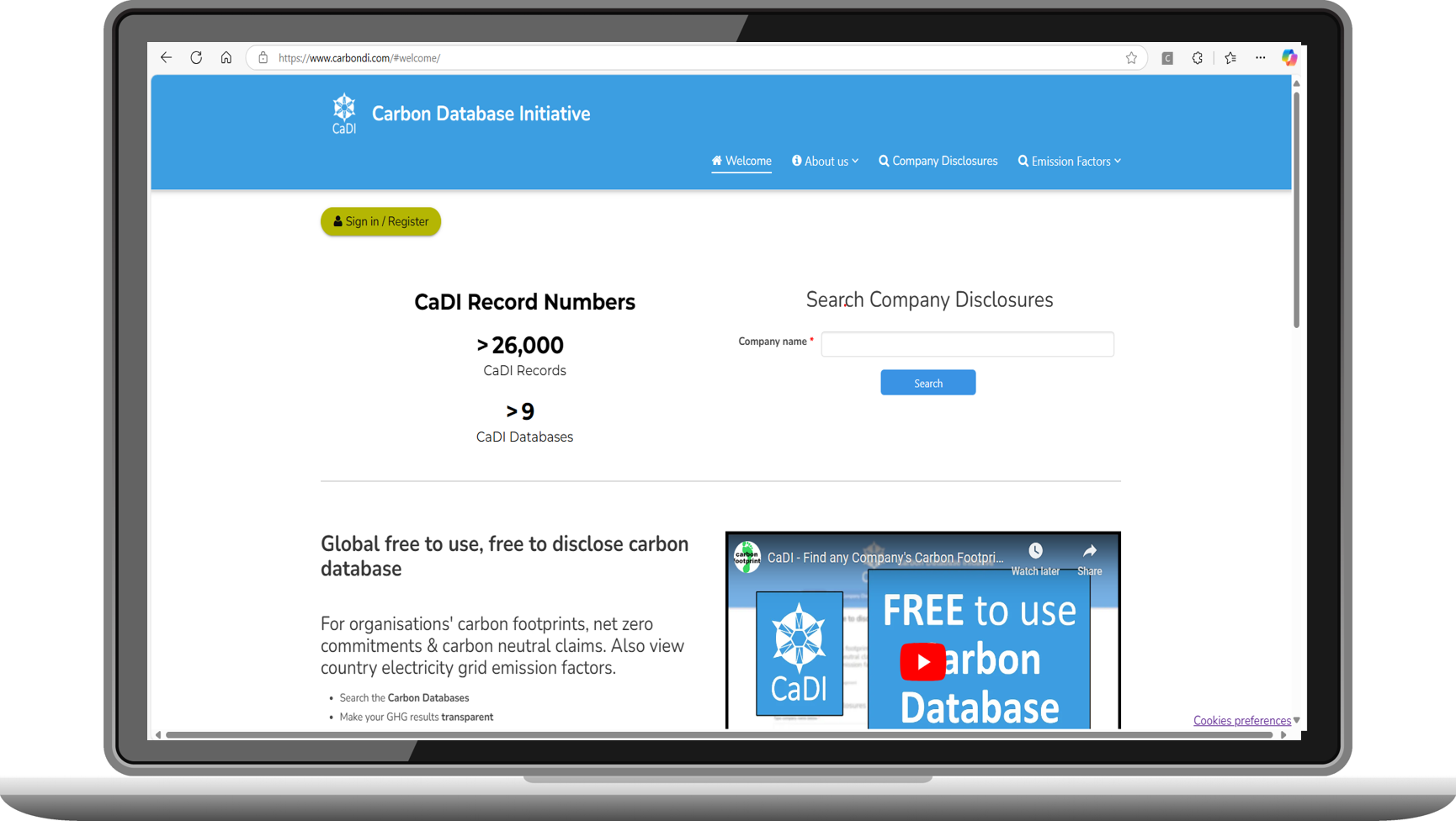
Carbon Data Intelligence platform

Carbon Data Intelligence

CaDI is a transparent platform empowering consumers and businesses to make informed decisions by providing comprehensive data on carbon emissions.

  • Transparency: Publish your organisation's emissions and Net Zero targets.
  • Informed Decisions: Empower consumers with environmental insights.
  • Business Support: Assist companies in emissions assessments and benchmarking.
  • Emissions Factors: Access reliable data for Scope 2 and 3 reporting.

Visit CaDI →
CRISP Carbon Ratings

CRISP Carbon Ratings

CRISP Ratings offer comprehensive evaluation of carbon offset projects, ensuring transparency and reliability. Make informed decisions that align your offset projects with Net Zero goals and enhance your environmental credibility.

By using CRISP-rated projects, you demonstrate genuine commitment to climate action and strengthen your Net Zero certification pathway.

Visit CRISP →

Support from our team of experts

Need help assessing your emissions, producing an emissions reduction plan, or setting adequate targets? Our team at Carbon Footprint is here to support you through every stage of your Net Zero journey.

Get in Touch

Email:
info@netzerostandard.org

Phone:
+44 1256 592599

Address:
c/o Carbon Footprint Ltd
Belvedere House, Basing View
Basingstoke, Hampshire
RG21 4HG, UK

Common questions about Net Zero Standard

The Net Zero Standard is a comprehensive framework providing a tiered certification pathway for organizations to set, implement, and achieve verified net zero emissions across their operations and supply chains.

Participating demonstrates your commitment to climate action, builds trust with stakeholders and consumers, aligns with global climate goals, and provides a credible pathway to measurable emissions reduction.

The Net Zero Standard features six levels across two tiers. Essential levels (E1–E3) cover Scope 1, 2, and essential Scope 3 emissions. Comprehensive levels (C1–C3) include all relevant emissions including supply chain and end-use. Each tier progresses from targets set, to on track, to achieved.

Targets must be science-based, aligned with limiting global warming to 1.5°C, and consistent with achieving net zero by 2050. Absolute reduction targets are required, and the baseline year must be clearly defined.

Carbon offsetting is used only after achieving at least a 90% absolute reduction in emissions. High-quality, verified carbon removal credits can offset the remaining 10% to reach net zero. We recommend using CRISP-rated projects for transparency and credibility.

Start by downloading the Net Zero Standard Requirements Document for detailed criteria. Then visit our Apply Here page to submit your application. Our team will review your submission and guide you through the verification process.

The NZS requires a minimum reduction of 45% in absolute emissions by 2030 (from a 2015 or later baseline year) and net-zero emissions by 2050. You can also refer to the latest IPCC reports and relevant sector-specific guidance for further information on 1.5°C-aligned pathways.

The NZS prioritizes absolute emission reduction targets. However, intensity-based targets can be used if they are accompanied by a commitment to absolute emission reductions in the long term.

The NZS requires companies to achieve a minimum of 90% reduction in emissions from their baseline year before using carbon removal offsetting to achieve net zero.

Choose projects that are certified by a carbon crediting program that adheres to the ICVCM Core Carbon Principles (CCPs). The NZS recognizes carbon credits issued by programs that have been assessed and deemed CCP-eligible by the ICVCM.

Certified companies can use the official NZS logos associated with their certification level on various communication materials, following strict guidelines.

Yes, you can use the NZS logo on product packaging, provided that the product or service is directly related to the company's net zero achievements and the logo does not potentially imply the product or service as being net zero or carbon neutral.

The total time for achieving certification can vary, but it typically takes several weeks from the initial application to the final decision.

Ready to get started?

Apply to the Net Zero Standard or check your eligibility today.